
Accounting & Financial Management
Business Registrations
Tax & Regulatory Compliance
Annual Compliance Services
About Company






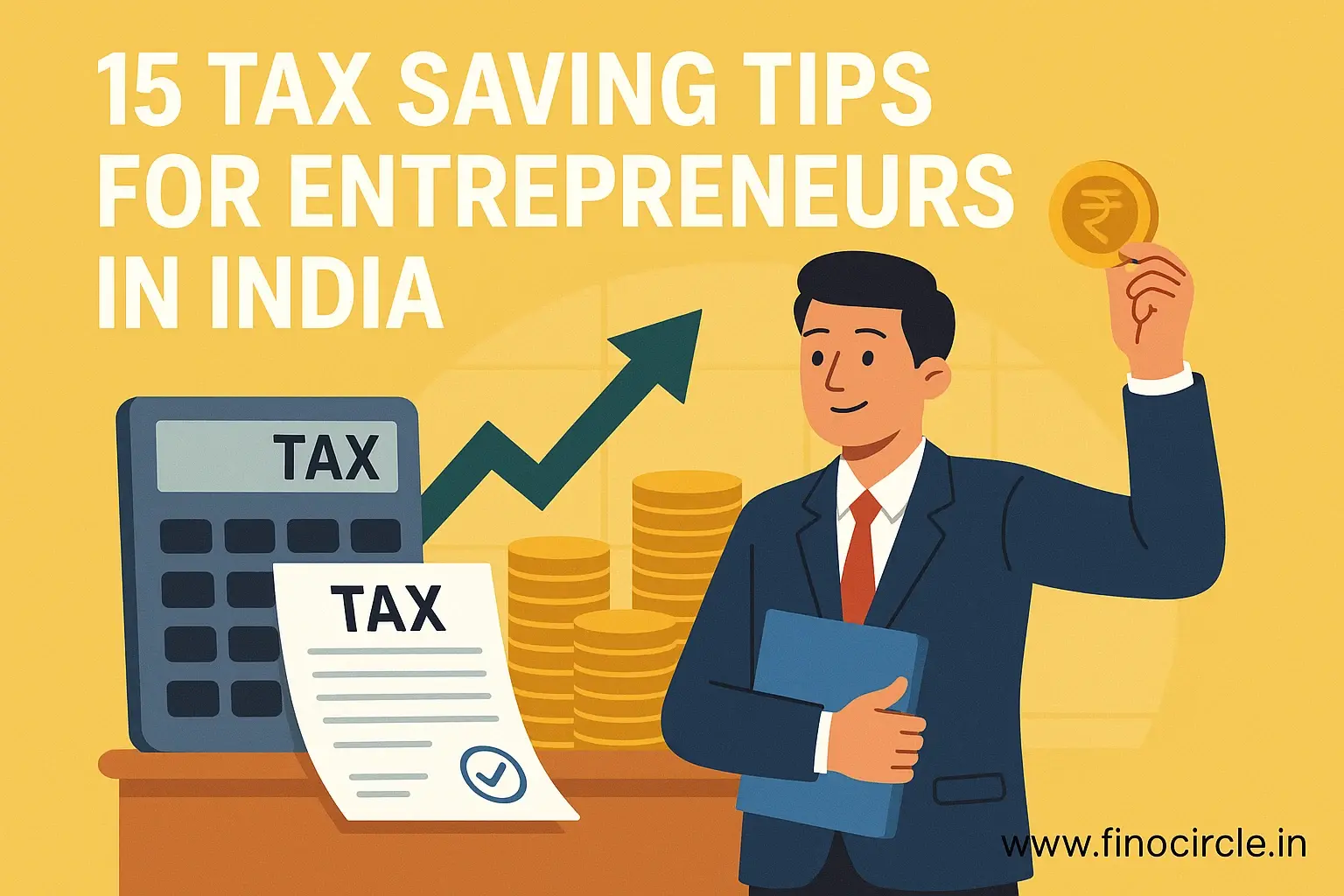
Every rupee saved in taxes is a rupee earned for business growth. As an Indian entrepreneur, understanding the tax framework is a skill that can put you in position for exponential growth. At Finocircle, we have expertise in tax management, and we help over 170 clients with implementing strategic tax-saving tips to significantly boost their bottom line.
Here are 15 practical tax tips that every business owner should know to minimize their tax liability legally.
Your business structure directly impacts your tax obligations. Consider these options:
Expected Benefits: A Private Limited Company can save 10-15% more in taxes compared to sole proprietorship through better expense deductions and depreciation benefits. For a business earning ₹10 lakh profit, this could mean ₹1-1.5 lakh in additional tax savings annually.
Pro Tip: Manufacturing businesses often benefit more from a Private Limited Company structure due to additional depreciation benefits.
Section 44AD offers presumptive taxation for businesses with turnover up to ₹2 crores. Under this scheme:
Expected Benefits: If your actual profit margin is above 8%, this scheme can reduce your taxable income significantly. For a business with ₹50 lakh turnover and 20% actual profit margin, you’ll pay tax on only ₹4 lakh instead of ₹10 lakh, saving approximately ₹1.8 lakh in taxes annually.
Example: If your turnover is ₹1 crore, your taxable income is only ₹8 lakhs instead of actual profits.
Claim deductions up to ₹1.5 lakh annually through:
Expected Benefits: Maximum tax savings of ₹46,800 annually (at 30% tax bracket) or ₹31,200 (at 20% bracket) by fully utilizing the ₹1.5 lakh deduction limit. This essentially reduces your effective investment cost by your applicable tax rate.
Deduct health insurance premiums for:
Expected Benefits: Maximum potential tax savings of ₹30,000 annually (at 30% tax bracket) by utilizing the full ₹1,00,000 deduction limit. This makes comprehensive health insurance practically free while providing essential coverage for your family.
Total potential deduction: Up to ₹1,00,000 for comprehensive coverage.
Legitimate business expenses that reduce taxable income include:
Expected Benefits: Proper expense optimization can reduce taxable income by ₹2-5 lakh annually for small to medium businesses. For entrepreneurs spending ₹3 lakh on legitimate business expenses, this translates to tax savings of ₹60,000-₹90,000 depending on your tax bracket.
Key Rule: Maintain proper bills, receipts, and documentation for all claimed expenses.
Hire family members as employees to:
Expected Benefits: Employing 2-3 family members can reduce your taxable income by ₹5-7.5 lakh annually, resulting in tax savings of ₹1.5-2.25 lakh (at 30% bracket). This strategy works best when family members contribute meaningful work to your business.
Important: The work performed must be legitimate and salary should be reasonable for the role.
All marketing expenses are fully deductible:
Expected Benefits: Every ₹1 lakh spent on marketing reduces your tax liability by ₹20,000-₹30,000 depending on your tax bracket. This makes marketing investments significantly more cost-effective while simultaneously growing your business reach and customer base.
Strategic Approach: Increase marketing spend at year-end to reduce taxable income while growing your business.
If GST-registered, claim Input Tax Credit on:
Expected Benefits: ITC can reduce your GST outflow by 60-80% of your input GST paid. For businesses with ₹10 lakh monthly purchases (18% GST), claiming ₹1.8 lakh ITC monthly can save over ₹20 lakh annually in GST payments.
Benefit: Reduces your GST liability, effectively lowering overall tax burden.
Business use of personal assets is deductible:
Expected Benefits: Vehicle-related expenses can add up to ₹1-2 lakh annually in deductions for entrepreneurs who travel frequently. Combined with communication expenses of ₹30,000-50,000 yearly, this can reduce your taxable income by ₹1.5-2.5 lakh, saving ₹30,000-75,000 in taxes.
Documentation: Maintain logbooks for vehicle usage and separate business phone connections where possible.
Working from home? Claim proportionate expenses:
Expected Benefits: For a home office occupying 25% of your home space, you can claim 25% of household expenses. If your annual home expenses are ₹2 lakh, you can deduct ₹50,000, saving ₹10,000-15,000 in taxes annually.
Calculation: If your home office occupies 20% of your home, claim 20% of these expenses.
Mandatory TDS deduction applies to:
Expected Benefits: Proper TDS compliance ensures 100% expense deductibility. Non-compliance can result in 30% of the expense being disallowed, meaning a ₹1 lakh payment without TDS could increase your taxable income by ₹30,000, leading to additional tax of ₹6,000-9,000.
Consequence: Non-compliance can lead to disallowance of the entire expense, significantly increasing your tax liability.
Claim depreciation on business assets:
Expected Benefits: On a ₹10 lakh machinery purchase, you can claim ₹1.5 lakh regular depreciation plus ₹2 lakh additional depreciation (if eligible), totaling ₹3.5 lakh deduction in the first year. This reduces your tax liability by ₹70,000-1.05 lakh depending on your tax bracket.
Strategy: Time your capital purchases to maximize depreciation benefits in high-income years.
Under Section 35(2AB), claim deductions for:
Expected Benefits: R&D expenses often qualify for weighted deductions of 150-200% of actual expenditure. For every ₹1 lakh spent on eligible R&D activities, you can claim deductions of ₹1.5-2 lakh, providing tax savings of ₹30,000-60,000 while fostering innovation in your business.
Benefit: Enhanced deductions often exceed 100% of actual expenses incurred.
Avoid cash payments exceeding:
Expected Benefits: Compliance with cash payment limits ensures 100% expense deductibility. Violating these limits makes the entire payment non-deductible, meaning a ₹25,000 cash payment would increase your taxable income by the full amount, leading to additional tax of ₹5,000-7,500.
Impact: Payments above these limits become non-deductible expenses, increasing your taxable income.
Solution: Use digital payments, bank transfers, or cheques for all substantial transactions.
Additional tax-saving tips include:
Expected Benefits: Strategic implementation of these advanced techniques can provide additional tax savings of ₹50,000-2 lakh annually. Charitable donations alone can provide 100% deduction, meaning ₹1 lakh donated saves ₹20,000-30,000 in taxes while supporting social causes.
These tax-saving tips can significantly reduce your tax liability when implemented strategically and legally. Remember, the goal isn’t just to save taxes but to build a sustainable and compliant business structure. Each tax for tips strategy should align with your business objectives and growth plans.
Always consult with a qualified tax professional before implementing major tax strategies to ensure compliance with current Indian tax laws and regulations.
