
Accounting & Financial Management
Business Registrations
Tax & Regulatory Compliance
Annual Compliance Services
About Company






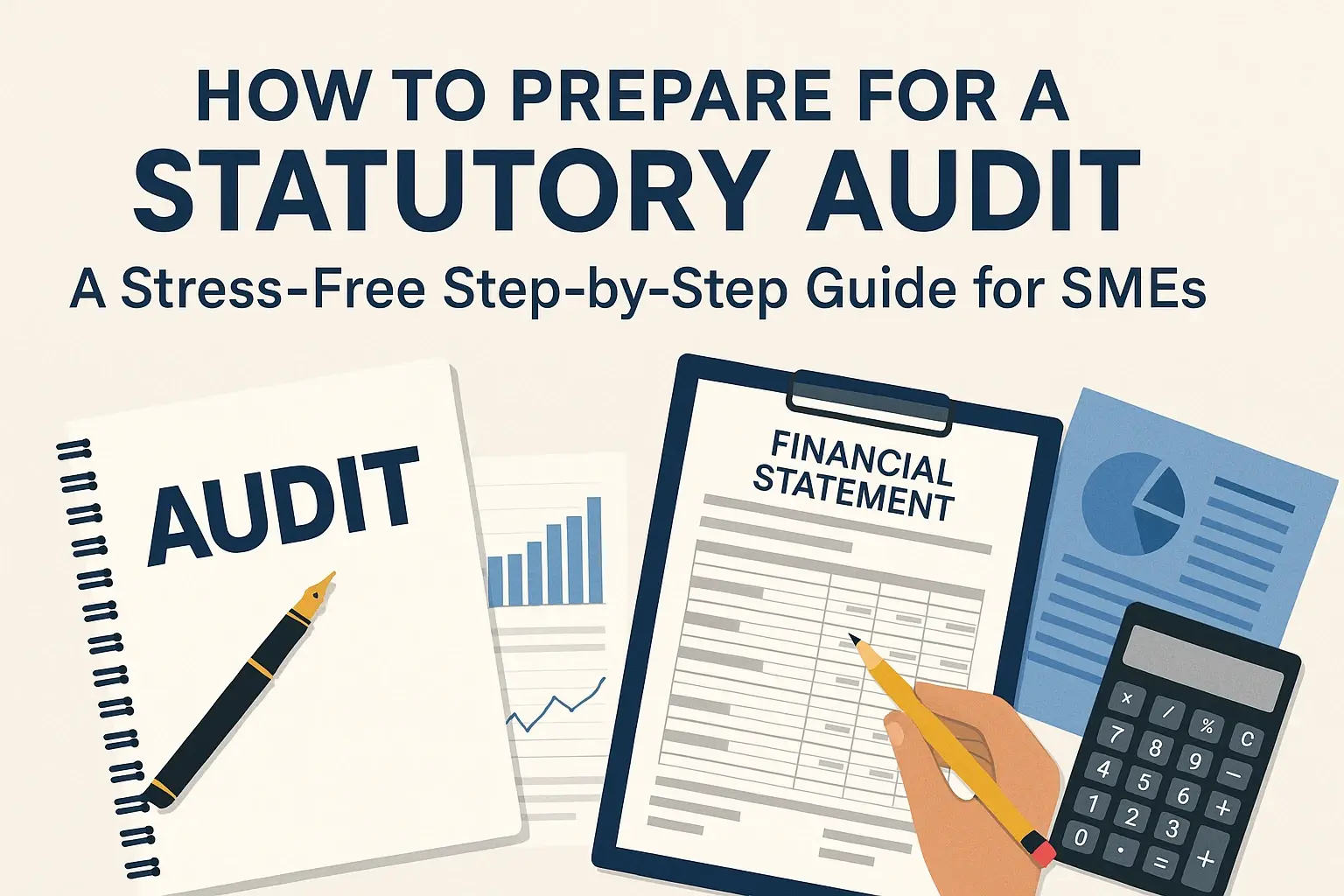
It may feel daunting and overwhelming when faced with your first statutory audit if you are a SME. As soon as we hear the word “audit”, often gives us the impression of stern accountants, endless paperwork and a lot of tension. But what if someone told you that a statutory audit is not a hustle, it’s an opportunity.
Yes, you heard it right! A statutory audit is the mandatory review of financial statements and processes of your company to ensure there is compliance and accuracy in accounting and financials. For SMEs, it is in fact more than just a legal formality. It is basically a chance to validate your company’s financial status, build credibility as well as determine the areas that need operational improvement. The key step to a smooth statutory audit lies in proper preparation.
Here we will present a step by step guide on how to help you get ready for audit with confidence and without much stress.
First of all, you must know the when and why of being audited. In India, statutory audit is governed mainly by the Companies Act 2013. Thus it is compulsory for all Pvt. Ltd. Companies irrespective of the capital or turnover. The audit should be conducted yearly and then the report should be filed with ROC i.e. the Registrar of Companies.
Always mark the calendar and remember that audit covers the fiscal year April 1 to March 31. The process should be done before your AGM or Annual General Meeting. Having information about this timeline serves as your first planned move.
Auditing is a team effort so designate internal point person such as a finance manager to liaise with auditor. The person will then be responsible for getting all documents required. Also, start by making a checklist of the necessary documents required. Here is the list:
This step is the most important among all that paves way for a hassle free audit. So before the auditor arrives, you can conduct your own review thoroughly. How you can do it easily-
The internal thorough review you do will likely uncover the inconsistencies. You need to fix them right.
Clear the previous outstanding entries- Clear up and investigate the old advances, unexplained reconciled items and suspense account entries.
Classify right– Make sure that all incomes and expenses are classified correctly in the Profit and Loss account. Do not mix personal and business expenses.
Document every detail– For unusual transactions or adjustments; make sure that you have supporting documents and clear rationale. The auditor appreciates a nicely documented trail.
When you are prepared internally, now it is time that you engage with an auditor.
The auditor performs sample checks, tests as well as verifications during the audit process.
Preparing for statutory audit is a time consuming and complex process, pulling your team members time and away from their main business activities. You don’t have to do it all alone. At Finocircle, the team understands this challenge and they help you connect with trusted experts to make the audit preparation stress free.
Expert CA and financial advisory
You get support and advice from a network of CAs who guides you through the whole auditing process. They also conduct a pre audit review to resolve accounting issues and make sure that your books are compliant with latest standards.
Bookkeeping and accounting
The base of clean audit is clean books. Bookkeeping services from Finocircle ensure that your daily transactions are accurately recorded, ledgers are reconciled and financial statements are correctly generated.
GST and tax support
Experts at Finocircle maintain records, file your TDS returns and GST on time, ensuring your tax related computations are audit ready.
Documentation & compliance
The experts can further manage and organize necessary legal and financial statements, documents, ensuring that nothing gets missed when the external auditor asks.
So, don’t let that audit anxiety hold you back. Prepare in advance and with right support and expertise, you can easily transform your statutory audit from an obligation to a valuable business financial health check.
